Art Restoration and Conservation : The Gallery's Role
Art Restoration and Conservation
The Gallery's Role
What keeps a painting standing against time is, more often than not, decisions made long before a brush is lifted — and the first custodian of those decisions is almost always the gallery.
A canvas, an oil painting forgotten in an attic, a bronze sculpture — none of them stand outside of time. Humidity, light, dust, touch: all of it leaves a quiet trace. That artworks survive across centuries is not an accident; it is the result of continuous, largely invisible care. At the center of that care sits an actor most viewers never notice: the gallery.
Say "gallery" and people think of exhibitions, sales, curation. Yet for a work to remain on the wall at all, a far larger, unseen chain of responsibility is at work: conservation and restoration. This piece looks at the difference between the two, and at the gallery's real role in the process.
Restoration, or Conservation?
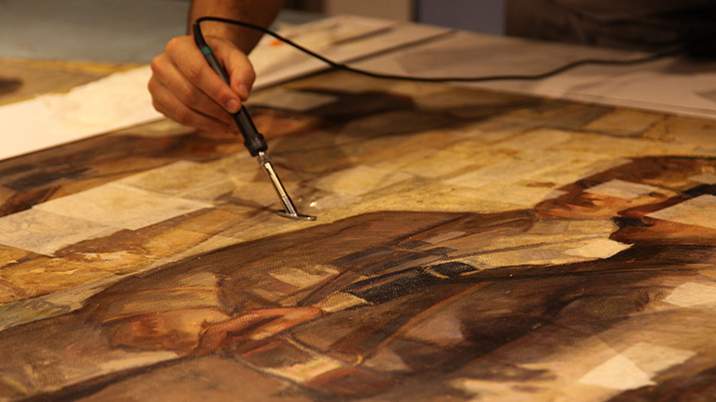
The two terms are often used interchangeably, but the difference matters. Conservation is the effort to protect a work's current state and slow its deterioration — humidity control, proper lighting, correct framing, regular condition reports. Restoration is a more interventionist step: replacing lost pigment, cleaning a cracked varnish layer, rejoining a broken piece of sculpture.
For a gallery, conservation is a daily discipline; restoration is an exceptional, carefully weighed decision. In a well-run gallery, restoration steps in only where conservation has fallen short — it never replaces it.
To conserve a work is to know when not to touch it; to restore it is to know when, and how much, to touch it.
The Gallery's First Job: Preventive Care
The least visible yet most critical function galleries serve in the art world is preventive conservation. This covers every measure taken before a work is ever damaged: keeping temperature and humidity stable, UV-filtered lighting, acid-free matting and framing materials, vibration-absorbing packaging during transport.
When these measures are neglected, the damage is often irreversible. Colour fading on a canvas or yellowing on a paper work can be partly improved through restoration, but the piece can never be returned exactly to its original state. Which is why, for a gallery, the most valuable restoration is the one that never becomes necessary.
The Decision to Restore: Who, When, How?
A gallery does not decide to restore a work alone — nor should it. The decision typically moves through a conservator's condition report, input from the artist (if living) or their estate, the collector's approval, and sometimes the assessment of an independent art historian. The gallery's role here is that of a coordinator: bringing these parties together and managing the process transparently.
Restoration decisions made in haste, or on aesthetic grounds alone, can seriously damage a work's market value and historical integrity. Serious galleries therefore treat restoration less like a "repair" and more like a medical intervention: diagnosis, a second opinion, reversible methods.
The Ethical Line: Respecting Originality
One of the core principles of conservation ethics is reversibility: every intervention should be undoable by a better technique or better knowledge in the future. Galleries are responsible for making sure the restorers they work with hold to this principle. Permanent, aggressive interventions, or ones that mask a work's original surface, may look "finished" in the short term, but they lower both historical and monetary value over time.
This is why reputable galleries don't hide the traces of restoration — they document them. What material was used, which area was treated, on what date: all of it becomes a permanent part of the work's file.
Working With Specialists
No gallery carries out restoration on its own. In a field where chemistry, art history, and craftsmanship intersect, the gallery works alongside conservators, materials scientists, art historians, and sometimes forensic specialists — particularly for works of disputed authenticity. The gallery's added value here isn't technical expertise; it's the ability to match the right specialist to the right work, and to communicate the process credibly to the collector or institution.
Meeting the Public: Transparency and Education
Restoration and conservation don't have to stay a purely behind-the-scenes technical process. More and more galleries are sharing it with visitors — exhibiting before-and-after images, hosting talks with conservators. That transparency pays off two ways: viewers come to understand art's fragility more deeply, and the gallery reinforces its own credibility.
In the end, a gallery's reputation is measured not only by the works it shows, but by how it looks after them.
Conclusion
That a work of art reaches us intact is the result of quiet, ongoing labour. The gallery is the invisible architect of that labour: the institution that prevents deterioration, ensures intervention happens at the right time and by the right hand, and keeps the process documented and transparent. Restoration is less about making a work look "as it once did" than about the responsibility of passing it on correctly to future generations — and that responsibility begins at the wall where the work hangs.